Starting point: commuting in rural Austria
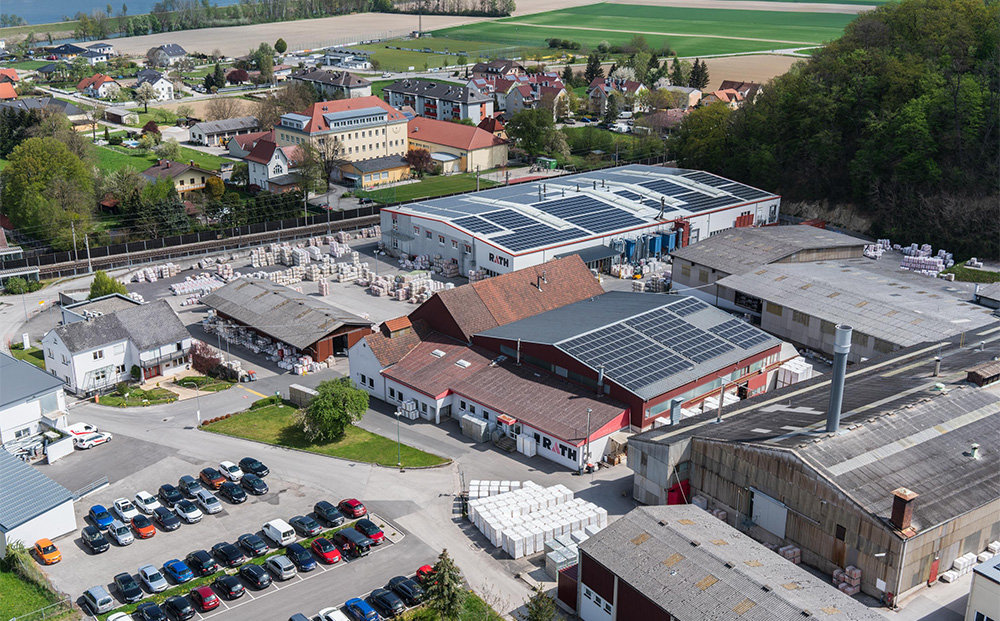
Krummnußbaum is located in the Mostviertel region, near the Danube – a typical rural industrial site in Lower Austria. Public transport connections are, as is often the case in rural areas, suboptimal. For many employees, the car is not a choice but a simple necessity.
It was in exactly this environment that foama was able to carry out a workplace mobility management project together with Rath – made possible by the commitment of Torsten Longerich, who initiated the project internally.
The project was funded by the Lower Austrian Chamber of Commerce (Wirtschaftskammer Niederösterreich) and ran from April to June 2026.
Project goals and approach
Three clear goals were jointly defined at the outset:
- Capture commuting patterns – How do employees actually get to work? What is the current modal split?
- Raise awareness – of sustainable, environmentally friendly and cost-saving mobility alternatives.
- Promote carpooling – as a low-threshold, immediately implementable first step.
These goals align seamlessly with Rath's strategic direction: safety, sustainability and growing ESG requirements are already firmly anchored in the Rath Group's sustainability report. This mobility project follows directly on from that line.
The project began with an on-site walkthrough, during which all mobility-relevant points were discussed and the existing infrastructure was assessed. In parallel, extensive data was provided: fleet data, parking occupancy, working time regulations, shift schedules and much more.

All relevant stakeholders were involved from the start: management, production, maintenance, quality management, Health Safety & Environment (HSE) and HR. Workplace mobility management is not purely an HR topic – it is a cross-cutting issue that spans the entire company.
Data collection: the foama survey series
After the site visit, the foama survey series was adapted to Rath's specific needs and conditions in Krummnußbaum. Over five weeks, participating employees received a sequence of targeted, short and personalised survey emails.
The decisive difference from classic mobility surveys: every participant received individually tailored analyses in return – including personal savings potential and concrete mobility recommendations based on their home location and habits.
"A classic survey takes. The foama survey series gives value back – for the company and for every individual employee."
This is not a minor detail: linking a survey to personal benefit yields significantly higher quality and participation rates.
Results: what the data shows
One fifth of the workforce took part in the survey – modest at first glance, but sufficient for reliable and insightful results.
Modal split: predictably car-dominated
The distribution of transport modes confirms the picture expected for a rural industrial site:
- 89% of employees travel to work alone by car
- 7% use public transport
- 4% walk, cycle or use an e-bike
A further 14% combine multiple options (e.g. alternating as driver and passenger by car).
💡 The surprising potential
On closer inspection, a very different picture emerges. Site accessibility is significantly better than current commuting patterns suggest: 20–30% of respondents own a bicycle, an e-bike – or could theoretically commute by public transport without spending significantly more time.
Specifically:
- One third of employees can reach the site within 20 minutes by bicycle
- 37% can reach the site within 30 minutes by public transport
A wake-up call: there is considerable potential here for further awareness-raising measures.
Workforce carbon footprint
The commuting data showed: on average, 1,130 kg of CO₂ per employee per year is emitted through commuting alone – equivalent to roughly 1.13 flights from Vienna to Berlin, per person, every year.
Cost potential: up to €186,000 in annual savings
Every participant received a personal mobility recommendation. If all employees used the optimal alternative to their current mode of transport, the picture looks like this:
- Average mobility costs in the status quo: €3,500 per person per year (including car depreciation)
- Average savings potential with recommended transport mode: €1,500 per person per year
- Extrapolated to the entire workforce: over €186,000 in annual savings for employees – through switching to bicycle, e-bike, public transport or walking
ℹ️ Note
These figures are not based on unrealistic scenarios, but on data-driven, individual calculations based on each participant's actual home location and commuting routes.
Satisfaction and pain points
Satisfaction with the commute averages 4.2 out of 5 stars – a positive baseline. Nevertheless, clear pain points emerge in qualitative feedback: poor public transport connections, delays and cancellations are mentioned most frequently.
Employees' main improvement wishes were: job bikes, e-bikes, e-scooters and better public transport connections.
Fuel prices as a driver
Rising fuel costs are clearly felt across the workforce:
- Two thirds feel at least partially financially burdened by expensive fuel.
- 25% have already changed their mobility behaviour as a result.
- 40% would like to change their behaviour but cannot find suitable alternatives.
Carpooling: great potential, little experience
Carpooling is still uncommon in the workforce – interest is correspondingly low. Those who don't know it don't want it. Those who do know it know it can be cumbersome. And yet:
- One quarter of respondents want to be actively connected with potential carpool partners.
- According to accessibility analysis, 43% could form carpools without taking significant detours.
Enormous potential lies dormant here, which can be unlocked through targeted information and the right digital tools.
Recommended measures
Based on the survey results, concrete measures were derived for Rath in Krummnußbaum:
- Introduce job bike leasing – lease bikes with salary conversion offer significant tax advantages for both employers and employees.
- Promote carpooling with a commuter app – low-threshold, immediately implementable, with high leverage. The data shows where carpools are feasible. Now a user-friendly platform is needed.
- Introduce job tickets – as a tax-advantaged subsidy for public transport.
- Increase visibility and accessibility of public transport – many employees don't even know they could get to work by bus in 30 minutes. Good communication is the first and cheapest step.
Value for Rath – and what other companies can learn
The project delivers concrete, measurable value for Rath on several levels:
Attractive employer brand
In times of rising mobility costs, employers who actively support commuting are perceived as forward-looking and caring. That is employer branding with real substance.
Healthier and more motivated workforce
Active commuting – on foot, by bike or e-bike – means more movement, more balance and fewer sick days. What is good for employees directly affects productivity and workplace climate.
Efficiency in fleet and parking
Fewer car commuters mean less parking pressure and new scope for business travel policies and fleet management.
ESG & CSRD compliance
The survey provides exactly the data needed for Scope 3 reporting under CSRD – as a by-product of a project that simultaneously creates real value for employees.