The Iran war is causing strong fuel price impulses worldwide, which is influencing mobility behavior. At the same time, for many employees the same reality applies: simply "driving less" on the way to work is often not a realistic short-term option.
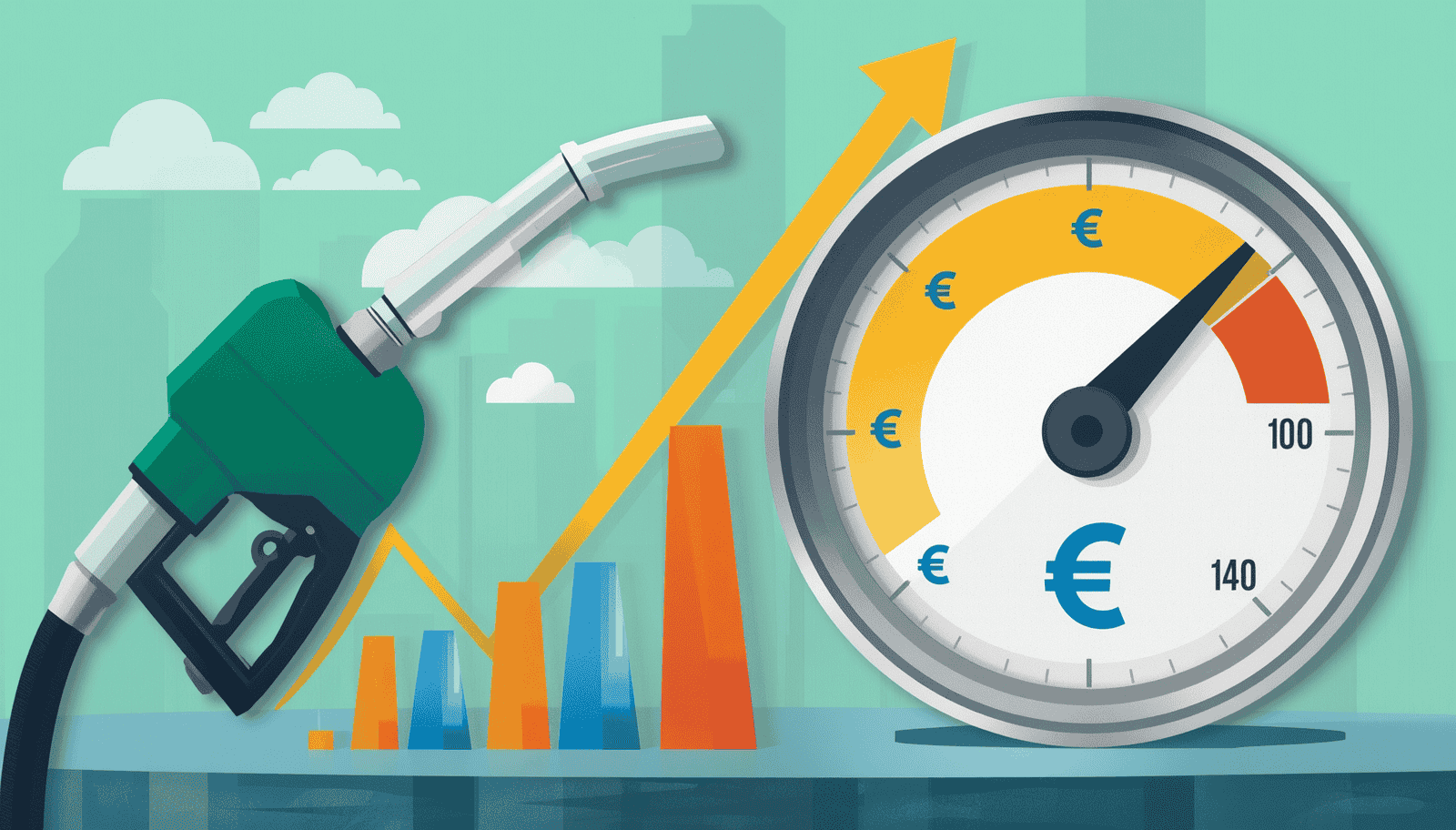
The Chamber of Labour Upper Austria reported that fuel markups in a recent phase rose more strongly than crude oil prices (+38% for petrol, +57% for diesel). Even if local dynamics differ by region, the core challenge remains: commuter mobility is often highly constrained in the short term.
💡 Why this matters for employers
Commuting costs are effectively part of employees' total cost of work. Sharp increases influence employer attractiveness, retention, and location competitiveness.
Price shock meets commuting reality
In Austria, a substantial share of the workforce commutes across municipal borders, as shown by Statistics Austria's commuting data. At the same time, EU-level evidence confirms that fuel prices have been highly volatile since 2020, driven by overlapping geopolitical and market shocks (Eurostat on transport fuel price volatility).
That combination is critical: high price volatility + limited short-term alternatives. Employees without reliable modal options must absorb the cost pressure directly.
ℹ️ Sustainability context
Transport remains one of Europe's largest emissions drivers. The European Environment Agency (EEA) highlights that transport decarbonization is central to climate targets, increasing pressure on Scope-3-adjacent commuting strategies.
Why employers have real leverage now
The question "What will you do about rising fuel prices?" should not only be asked of individuals. Employers shape commuting realities through site accessibility, flexibility policies, and mobility incentives.
The resilience angle is growing, too. The International Energy Agency (IEA) points to demand-side measures such as teleworking, ride-sharing, and smarter mobility organization as practical ways to reduce oil-price exposure.
"A problem, but also a window of opportunity." This window opens when rising costs increase attention and employers provide credible alternatives at the same time.
From job tickets to remote work: a practical measure mix
Workplace mobility management delivers best results as a package, not as isolated actions.
Quick wins (0-3 months)
- Public transport job tickets or mobility budgets
- Internal carpool matching plus preferred parking allocation
- Secure bike parking and basic bike repair support
- Clear commuter option communication by location
Structural levers (3-12 months)
- Flexible schedules to reduce peak-hour pressure
- Reliable remote-work rules for suitable roles
- Bike and e-bike leasing plus charging infrastructure
- Shared mobility for business trips and shuttle concepts
⚠️ Common pitfall
Single measures without baseline data usually underperform. Start with a short, segmented mobility assessment and prioritize by real site-specific constraints.
A 90-day implementation roadmap
- Days 1-30: Baseline assessment (commute patterns, affordability pressure, location-specific bottlenecks).
- Days 31-60: Define segment-specific measure bundles (e.g., shift teams, office staff, field roles).
- Days 61-90: Launch pilot, align communication, and implement KPI tracking.
Useful metrics include alternative mode share, job-ticket/mobility-budget uptake, perceived commuting cost burden, and accessibility satisfaction.
When a majority of employees feel the impact of higher fuel prices directly in their daily commute, this is not a side issue. It is a clear management mandate. Companies that invest now not only reduce emissions, but also strengthen location attractiveness, planning reliability, and resilience.
Sources (selection)
- Chamber of Labour Upper Austria: Call for targeted fuel price intervention
- Statistics Austria: Place of work and commuting
- Eurostat: Volatility in transport fuel and lubricant prices
- European Commission: Weekly Oil Bulletin
- EEA: Transport and mobility
- IEA: Options to ease oil price pressures on consumers
- Austria's 2030 Mobility Master Plan (BMK)